Showing posts with label plants. Show all posts

Friday, July 17, 2015

Walking to a nonexistent gate at the Jesuit Center in Wernersvillemakes me ponder a new career

Walking to the gate at the Jesuit Center in Wernersville ... day lilies catches my eye. photo by Wayne Stratz 2015
I am writing a sermon for Sunday (update: here is the sermon). Plans come to mind. The plan was to walk to a gate and take photos of it. Just out of the door, day lilies caught my eye. By the time I reached to end of the driveway that leads up to the Jesuit Center, I had taken quite a few photos. The ones I favored the most are here.

The plan was to see the gate. Funny thing was, the gate was gone. I hadn't even noticed when I had driven into the center the previous day. I spent the rest of the retreat fascinated by moss and I have to admit I began to imagine a plan for my future. I was to become a professional moss photographer. Clearly a profession with a need for more members.

I have not given up my day job. But I do not think I will pass up any commissions to photograph moss. Planning to get somewhere because we feel called to take a journey, does not mean ignoring the beauty we pass along the way. Because the gait might be missing. But something was there and that is for next week.


Walking to the gate at the Jesuit Center in Wernersville ... rust catches my eye. photo by Wayne Stratz 2015

Walking to the gate at the Jesuit Center in Wernersville ... sap catches my eye. photo by Wayne Stratz 2015

Walking to the gate at the Jesuit Center in Wernersville ... a missing limb catches my eye. photo by Wayne Stratz 2015

Walking to the gate at the Jesuit Center in Wernersville ... a maple branch catches my eye. photo by Wayne Stratz 2015

Walking to the gate at the Jesuit Center in Wernersville ... moss catches my eye. photo by Wayne Stratz 2015

Walking to the gate at the Jesuit Center in Wernersville ... lichen catches my eye. photo by Wayne Stratz 2015


Friday, January 9, 2015

Recovering in the horticulture room: an annual gift of cuttings of Christmas Cactus

Christmas cacti cuttings

Last year was a rough year for our Christmas cacti. Overwatering may have done them in. So it was especially nice when my colleague and friend showed up with her plants this year. Once again she allowed us to take billions and billions of cuttings. Great success with rooting and now planted in these bright yellow pots. Caught my eye as I pondered a photo as my teaching week came to an end. Probably the fact that being a UofO Duck alum helped their cause


Tuesday, July 1, 2014

Celebrating Plant Diversity: Artist's Acanthus ~> Acanthus montanus

Artist's Acanthus Acanthus montanus

The last time I walked about Longwood Gardens with my camera, I tried to be patient, to wait and see what plants would jump out at me. Artist's Acanthus did just that and now I am trying to imagine a slug causing damage to such a fierce looking plant. To learn more about Acanthus montanus, a plant native to Tropical Africa, check out this site.

Artist's Acanthus Acanthus montanus bloom


Monday, February 3, 2014

Trees are amazing; exploring the path of water

Negative pressures. Avoiding spontaneous boiling. Surmounting great heights. And ever wasteful but important because of the waste. Love the enthusiasm shown for the splendid nature of plants.


Tuesday, February 5, 2013

digging science and how plants call out for help


I dig leaves that call out for help
and shadows
taken by
WayneStratz
via
his home garden
Today I taught a rather diverse set of classes all the same material, just used some different techniques along the way, but hopefully now all the students know that plants don't just sit there and take it when a caterpillar slobbers all over it.


Monday, November 26, 2012

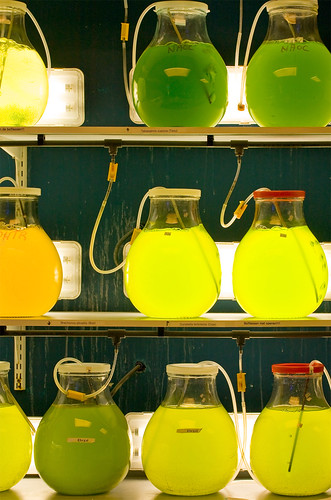
Vampire Algae, even if they are not vampires do something amazing


Algae
photo by Jenny Audring

My first period students start the week in the computer lab.  This week I had them checking out a DNA tutorial which got higher than average marks (DNA from the beginning).   Once they are rolling I sit back and wait for questions and occasionally throw one out to the masses.  I pull out my gadget and check my science list on Twitter.  "Vampire Algae" caught my eye.

As the students were putting the laptops away I prepared to tell them about the vampires.  And then all my classes got to hear about the vampires.  Not because they were vampires but because they are predators that can digest what we fail at, and we are animals with teeth and digestive juices and symbiotic enzymes.  Stressed out algae, Chlamydomonas reinhardtii, (low levels of CO2) suck cellulose from other plants and use it for energy.  How cool is that!  And how cool to think of other amazing things plants can do that we cannot do that are waiting to be discovered.  Of course the article turns to how we can use these algae to help fuel our vehicles.

This was a fine thing to stumble upon a day after celebrating my botany professor.  

Sunday, November 25, 2012

Who just may have helped us to become a duo


A relatively new friend was over for pizza last week and was curious how a biology major and a poetry major became a couple.  She was thinking that we would live in different worlds and what the heck would we talk about.

So maybe it is time to give a shout out to a professor at East Stroudsburg University, who not only told me how to ID a Red Oak, and showed me that plants were worthy of our attention, and fueled my passion for evolution, but also thought one should be well educated in other ways.

He handed me the current stories of Raymond Carver and the WWI poetry of Wilfred Owens.  He brought music I had never heard into my life and filled my head with recent research in areas outside the realm of biology.

Reading alumni magazines fills my head with people who have climbed higher and higher in the professional careers.  I have no desire, and maybe I learned that from Dr. Raymond Milewski, who after all these years is still an Associate Professor doing what he digs best.  Teaching students about what he loves.  I hope he still diverges into other topics from time to time.  I sure hope so, and yes, I am going to  let him know I am alive and well.

updated~ Margaret just reminded that he introduced me to smoked Gouda cheese and I can add to that, blood oranges


Sunday, July 3, 2011

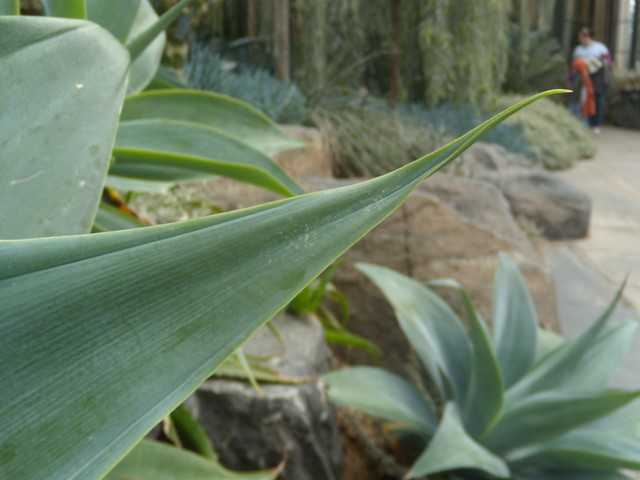
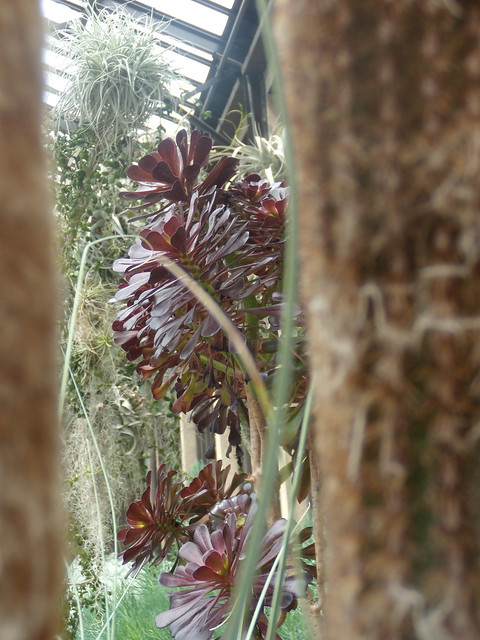
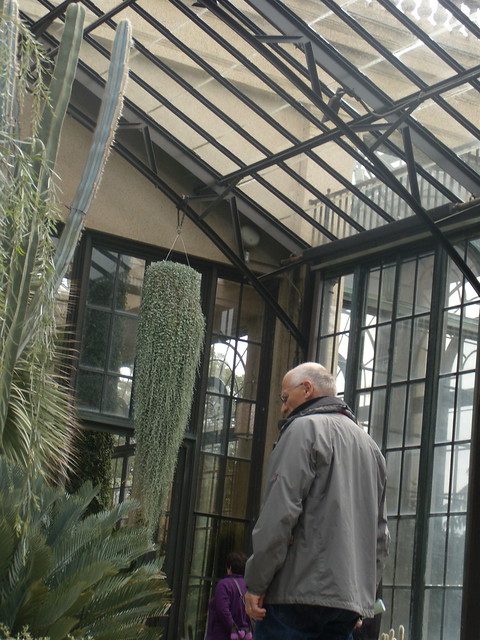
7 for the weekend: Watching, Praying, and sitting still at Longwood Gardens

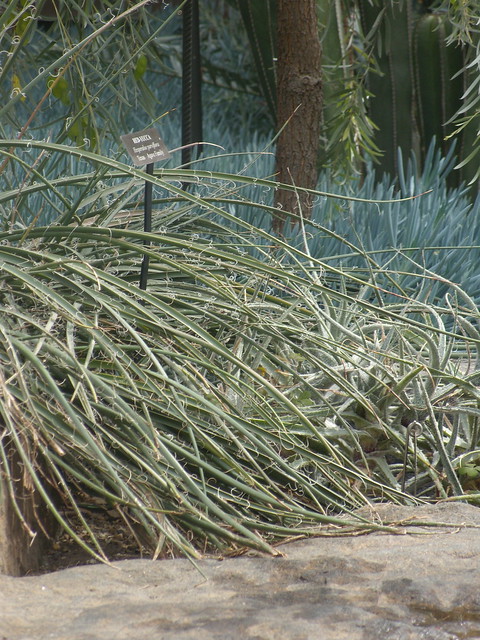
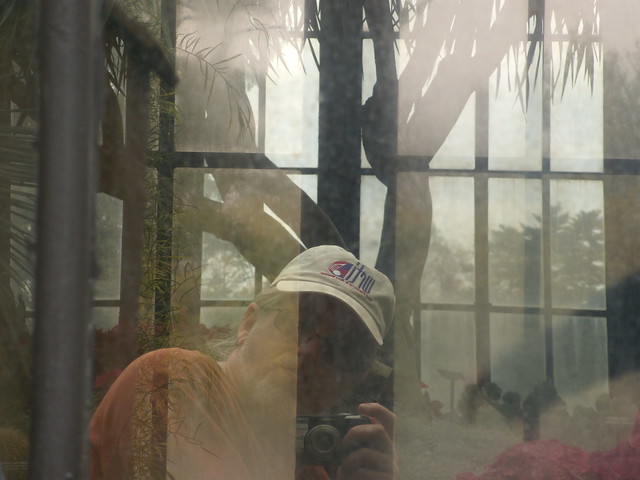
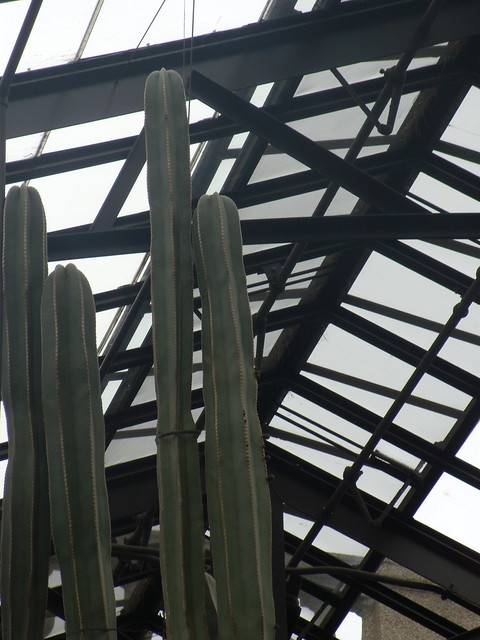
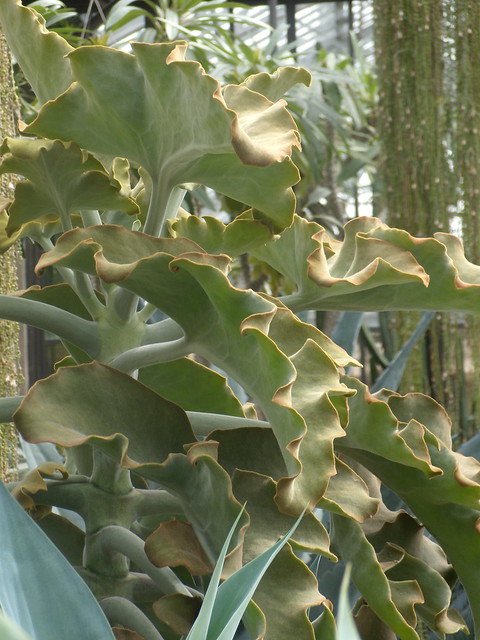
As Holy Week unfolded, the sign up sheet for Holy Trinity's 24 hour prayer watch slowly filled in as I waited. When one time slot was left I filled in my name and then realized I would be at Longwood Gardens with a friend, Paul Grecian. Well, Paul had no problems filling an hour with his camera as I headed off to pray with succulents. For an hour I sat on a boulder. Here are seven images that came from the one spot:


47  270/365  The Watch 1


47 281/365  The Watch 2


47  282/365 The Watch 3


47  295/365  The Watch 4


47 300/365  The Watch 5: watching myself


47  304/365  The Watch 6: up


47  309/365 The Watch 7

Monday, February 7, 2011

Science Mondays--- Hearts

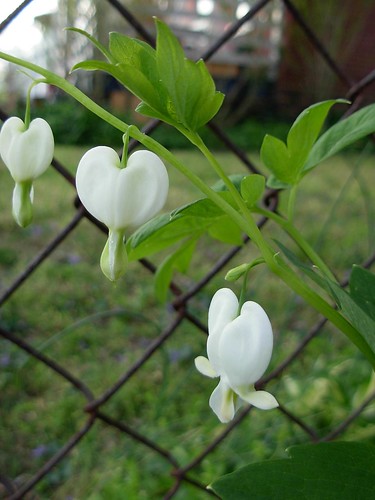
"white old-fashioned" bleeding heart


as yesterday's post came to an end, I realized I had not ventured into the science of hearts


1. Bleeding Hearts: the above variety from my front yard is pure white, but they do come in red and pink. It is a symbol of undying love. I hope to remember that this spring when they emerge and greet me as I walk down my porch steps. advice on growing this perennial

2. the rapidly beating heart. Generally speaking birds beat mammals which beat all else. It has to be with our "warm-blooded" metabolism. Hummingbirds can exceed 1000 beats per minute. Shrews win out for mammals which can have 800 beats per minute at rest and an excited shrew was clocked in at 1,511. It is believed that large mammals live longer because they do not wear out their body parts as quickly. The elephant hearts weighs in at 50 pounds and beats 30 times a minute.

3. the hibernating heart: The chipmunk goes from 200 to 5 beats per minute when it heads into hibernation.

4. The future heart transplant: Doctors have ventured into what would make amazing science fiction. They have found a way to take an organ, strip away all the cells, but leaving the protein matrix. Then provide cells and the right conditions and a dead heart can become functional again. If they master this technique, organ transplants could be revolutionized. Waiting to receive a donor liver would be replaced with waiting for your cells to create a new new liver on the matrix of another one. Rejection concerns would plummet. Watch the second chapter of this Nova Now to learn more.

5. 36 interesting facts about the human heart

6. no heart? If trees have no heart then how do they pump water to those high branches. The water is pulled by the leaves using the water and the evaporation out of the leaves (transpiration) and it helps that water is excellent at adhesion and cohesion so that the molecules can form a column. If the column broke, it would be hard to pull the water up.

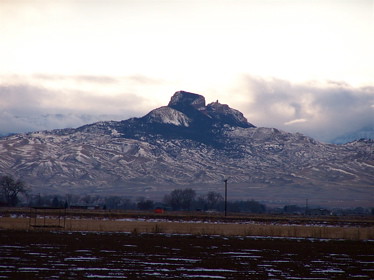
7. Heart Mountain in Wyoming consist of material 300,000,000 years older than the rocks at its base.


8. The Heart Nebula is a place where stars are emerging.

...